Volunteer Training Day
David Alderman, 17/08/2026

Photo Credit May Chemais
Somewhat typically for the north-west, we awoke to find it raining and forecast to continue until after lunchtime. Several Verifiers had met the previous afternoon, in glorious sunshine and walked around the park at Tatton, owned by the National Trust, looking for trees in various states of ageing and decay. Previous visits by some to check on the original National Trust data proved invaluable and it all saved a lot of walking time on the actual day of the event.
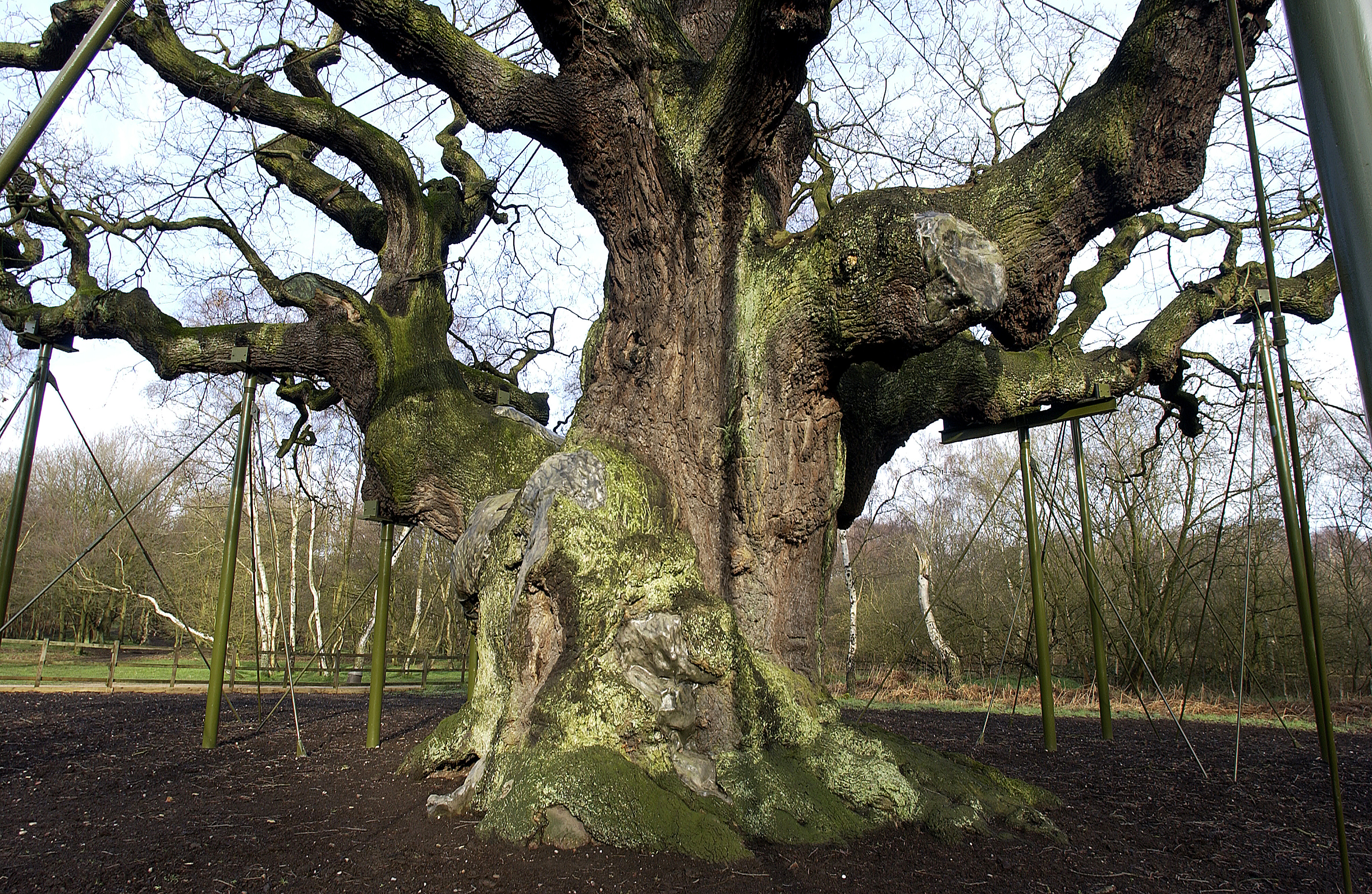
The National Trust were wonderful hosts and had set things up for us in the Lord Edgerton Room on the 1st floor of the mansion house. A suite of rooms overlooked the Italian Terrace and “provides scenic views of the parkland and distant Pennines all year round”, but not when the cloud is low and heavy with rain! A rather splendid old Sweet chestnut was in view and offered a temptation for the afternoons training outside.

Photo Credit May Chemais
Some of the ancient Sweet chestnut and oak are considered contemporary with the Old Manor house and be from Tudor or Elizabethan times. A new Hall built in the 1770’s was then extensively re-modelled in the Neo-Classical style between 1780 and 1813. Many mature and veteran trees will probably date to this period, influenced by the work of Lancelot ‘Capability’ Brown and the designed landscapes other landowners were creating at this time.
Our group of volunteers was a mix of experienced Lead Verifiers and newly recruited, recently trained verifiers. It was a chance to meet for the first time or catch up again for real after so many online meetings. After the excellent morning presentations and a fabulous lunch we put on our waterproofs and went outside where we were split into four groups. But the first tree we came to we remained together. It was an oak tree within protective fencing, with an interpretation board describing the value of veteran trees.

Oak No.262953 Tree - Ancient Tree Inventory
One large section had collapsed exposing a hollow trunk and there was no dispute that this tree had significant decay and is an irreplaceable habitat. Its current girth of less than 3m was a remnant of would have been closer to 4.5m when intact. Whilst there was no dispute over it being classified as a veteran tree, it is fair to say that opinion was divided about whether the tree was developmentally or chronologically ancient. Enough to say that it was agreed that whilst probably not 400 years old, there were several oak of similar size appearing to be in a similar condition nearby. This one had collapsed prematurely exposing advanced hollowing that many volunteers would identify with the tree being in its ancient life phase. In this case either opinion was considered correct, the important point being that such a tree justified inclusion on the ATI and protected for its habitat value. See what you think?
Oak No.262953 Tree - Ancient Tree Inventory
Now in our separate groups we visited four trees in turn before re-visiting them together to discuss our conclusions. The rain had eased but short-cuts through long, wet, grass, not an issue on the recce the day before, was not appreciated by all!

Tree No.1 Oak No.279592 Tree - Ancient Tree Inventory
Tree No.1 Oak No.279592 Tree - Ancient Tree Inventory
This mature oak generated a lot of discussion as to whether there was enough evidence of significant decay to call it a veteran. We learnt that holes between buttressing at ground level, created and perhaps frequented, by rabbits, badgers or foxes, do not automatically make a tree a veteran, it may just be an excavated burrow or den beneath the tree. Whist some accepted this and moved on, several volunteers were keen to discover more evidence. Torches and prodding sticks confirmed that hollowing was evident inside the lower trunk. For anyone still uncertain, one person hammered on the trunk with a large stick and we all heard the resounding hollow thud! Whilst it is not recommended to go round hitting trees, or ramming sticks into holes, there were other signs that were pointed out that added weight to there being substantial and significant decay. Several large branches had advanced hollowing and the crown was clearly distressed. One sharp eyed volunteer noticed a fungal fruiting body on a large branch breakout wound and by now everyone was in agreement that this tree justified veteran status.

Tree No.2 Hawthorn No.294810 Tree - Ancient Tree Inventory
Tree No.2 Hawthorn No.294810 Tree - Ancient Tree Inventory
This tree was the easiest and most quickly assessed tree of the day. One of seven hawthorn recorded on the ATI at Tatton Park, its hollow trunk provided immediate confirmation that it had significant decay and was therefore at least a veteran. The ATI Historic map layer shows it to be on or close to a “Well” and as hawthorn are often a feature of holy wells, particularly in Ireland, it was interesting to discuss whether it was part of an old boundary, cleared when the parkland was created, or had more historical connections. The final agreement reached was that either way the tree was at least developmentally ancient and it justified being verified as this.

Tree No.3 Horse chestnut No.113458 Tree - Ancient Tree Inventory
Tree No.3 Horse chestnut No.113458 Tree - Ancient Tree Inventory
A large and quite imposing Horse chestnut which, for its girth size and sheer volume, originally suggested this tree should be a veteran. Despite have some broken branch ends, showing signs of hollowing, there was a lack of evidence to suggest this tree has the required significant decay to record it as a veteran. An interesting discussion ensued regarding whether the tree could be chronologically ancient and what age this may be. Whilst surviving Horse chestnut with known planting dates before 1750 are rare (only 15% of the oldest known trees survive today – Tree Register data) there are quite a few from Capability Brown designed landscapes which must, by association, date to the late C18th and early C19th. This tree appears to have grown vigorously and is still, apparently, in reasonably good health. It may have been planted c.1800 but without historical proof it is probably a borderline case for being notable rather than chronologically ancient. Whilst we have no species guide on the ATI for Horse chestnut it would appear reasonable to suggest that any tree older than 250 should be ancient? Becoming developmentally ancient is rarely obvious in this species, which more typically demises quickly, often with a dramatic and catastrophic collapse.

Tree No.4 Oak No.6618 Tree - Ancient Tree Inventory
Tree No.4 Oak No.6618 Tree - Ancient Tree Inventory
The tree number tells us this was a relatively early tree recorded on the ATI and the oldest photos show an apparently healthy twin-stemmed ‘notable’ tree. One stem then fell, followed by the second but the first remained partially rooted and today we were met by a horizontal hollowing trunk on the ground, with live growth arising, phoenix-like, from higher up its length. There was no dispute that this tree was still alive and had significant and substantial decaying wood. With various fungal fruit bodies noticed and at least one identified, everyone agreed this was a veteran with high habitat value. It was good to see the National Trust leaving this in place, as well as the dead wood from the second stem. Not many years ago this would have been ‘tidied’ up and removed.
As the rain started again and with everyone all together, the day officially ended under the shelter of the Horse chestnut before we made our way back to the car park and mansion house. It was a day when we had all learnt a lot and left more confident in identifying and allocating the status of veteran trees on the ATI.

Photo Credit May Chemais

Photo Credit May Chemais